Mattress Materials & Comfort
Vispring Baronet Superb: Materials, Feel, and Fit Considerations
A mattress can sound persuasive in a showroom and feel entirely different at home. Assessing the Vispring Baronet Superb means looking past the name to the details that shape daily comfort: its construction, surface character, support, and the way those qualities meet an individual sleeper’s habits.
Published October 29, 2026
The Vispring Baronet Superb invites the kind of consideration that is useful with any substantial mattress: not simply whether it seems luxurious, but whether its materials and design are suited to the person who will sleep on it. A model name can suggest a certain tradition or level of finish; it cannot tell you whether your shoulder will settle comfortably, whether your hips will feel supported, or whether you prefer a gently yielding surface to a taut one.
Those judgments depend on a meeting of several things: construction, firmness, body shape, sleeping position, temperature preference, and the bed base beneath the mattress. Even a mattress made with appealing materials may not be the right fit if its feel conflicts with the sleeper’s needs. Conversely, an unfamiliar construction can prove comfortable when its support and surface response match the body well.
For the Baronet Superb, the most reliable approach is practical and slightly patient. Confirm the current specifications rather than relying on assumptions about a product family. Ask how the layers are arranged, what materials are used, what firmness options are available, and what care the mattress requires. Then compare those details with your own comfort preferences—not with an abstract idea of what a mattress ought to feel like.
Begin with the construction, not the label
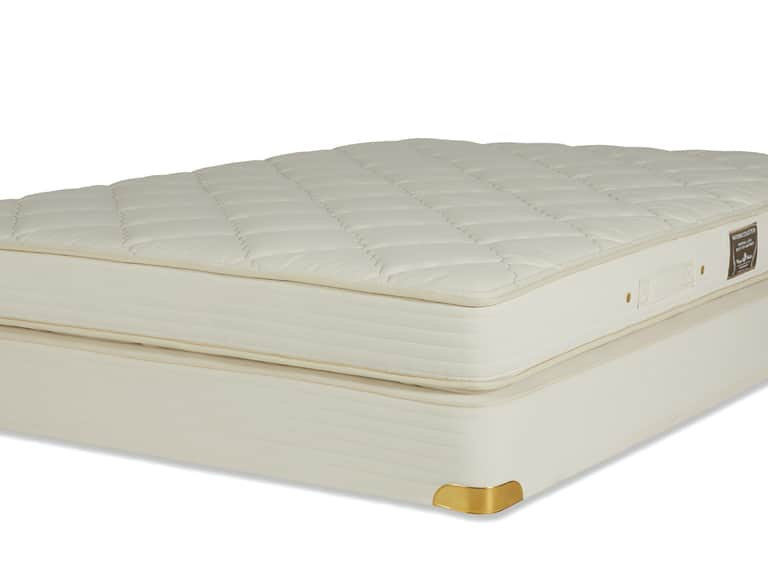
Construction is the framework behind a mattress’s feel. The materials, their placement, and the way they are assembled determine how the surface responds when weight is applied. A mattress may have a cushioning upper layer over a more supportive core, or it may use a design in which comfort and support are more closely integrated. The distinction matters because the first impression—softness at the surface—is not the whole story.
When evaluating the Vispring Baronet Superb, seek current, model-specific information about its components and internal arrangement. Product specifications can change, and descriptions of a brand or collection are not necessarily a substitute for details about the particular model. Confirm the materials used in the comfort layers and support system, the mattress’s overall height, and whether the construction differs by size or firmness option.
Material names can be informative, but they need context. “Natural,” “wool,” “cotton,” or “latex,” for example, describes a category rather than a complete account of performance. Two products that use a material in different proportions or positions may feel unlike one another. Likewise, terms such as “hand-finished” or “premium” do not, on their own, answer the practical questions of firmness, pressure relief, support, or maintenance.
Ask what is beneath the sleeping surface as well as what is on it. A quilted or cushioned top can influence the initial sensation, while the underlying support determines how the body is held over the night. A useful evaluation considers both: the small-scale comfort of the surface and the larger-scale structure that keeps the spine and joints from feeling poorly aligned.
Understanding surface feel and support
People often use “soft” and “firm” as though they were precise measurements. In practice, those words describe impressions, and impressions vary. A lighter sleeper may experience a mattress as firm because their body does not compress the upper materials very far. A heavier sleeper may sink more deeply into the same surface and describe it as softer. Body shape also matters: pressure tends to concentrate differently around shoulders, hips, and other prominent areas.
For that reason, surface comfort and support should be considered separately. Surface comfort concerns how the mattress feels at first contact and whether it cushions the parts of the body that press against it. Support concerns how well the mattress holds the body in a comfortable position. A mattress can feel plush at the surface yet still provide an unsatisfactory fit; it can also feel relatively firm on first contact while offering appropriate support once the body has settled.
Pay attention to pressure points during a trial. On your side, notice whether the shoulder and hip feel compressed. On your back, consider whether the lower back feels comfortably supported rather than suspended or pushed upward. If you sleep on your stomach, check whether the middle of the body seems to sink more than you find comfortable. These are observations, not medical diagnoses, but they make a showroom test more useful than a quick press of the hand.
Support is not synonymous with maximum firmness. A very firm mattress is not automatically a better mattress, just as a yielding surface is not automatically a less supportive one. The aim is an appropriate balance: enough cushioning for comfort, with enough resistance to keep the sleeper from feeling unsupported. That balance is individual and can depend on position, weight, and personal preference.
How sleeping position changes the assessment
Sleeping position offers a useful starting point for comparing mattress feel. Side sleepers often need a surface that accommodates the shoulder and hip without making the body feel crowded or sharply pressed. Back sleepers may place more emphasis on even support through the torso and lower back. Stomach sleepers commonly want to assess whether the central part of the body remains comfortably supported rather than dipping too far into the mattress.
These are tendencies, not rules. Many people change positions during the night, and two sleepers who share a position may have different needs because their body proportions, movement, and firmness preferences differ. The Baronet Superb should therefore be assessed against the sleeper’s actual routine—not simply a label such as “side sleeper.” If you move between positions, test the transitions and consider whether the mattress remains comfortable as you shift.
When trying a mattress, spend enough time in your usual sleeping posture for the first impression to settle. A brief sit or lie-down can reveal almost nothing about sustained comfort. If possible, use a pillow similar in height and feel to the one you normally use; the pillow influences neck position and can make a mattress seem better or worse than it would with your usual bedding. Wear ordinary, comfortable clothing and allow yourself to relax rather than treating the test like a timed demonstration.
For couples, individual preferences can complicate the decision. Discuss what each person means by “comfortable,” then compare those descriptions with the available specifications and trial arrangements. One partner’s preference for a soft surface may not align with another’s desire for a firmer feel. Verify whether the model offers any configuration or size-specific options, and confirm their details directly rather than assuming that a particular feature is available.
Materials, temperature, and everyday sensation
Natural mattress materials are often discussed in terms of breathability, moisture management, or temperature regulation. Those properties may matter to people who tend to feel warm during sleep, but a material name alone cannot guarantee a particular night-time temperature. The whole bed environment contributes: room temperature, humidity, bedding, sleepwear, body heat, and the structure of the mattress itself.
If materials are part of the appeal of the Vispring Baronet Superb, ask for a clear account of what is present in the specific model and how those materials are used. A natural fiber in a quilted surface behaves differently from a natural fiber in a deeper layer, and the overall construction influences airflow and feel. It is also sensible to ask whether material information relates to the mattress as a whole or only to selected components.
Pay attention to the surface sensation beyond softness. Some sleepers prefer a smooth, close-fitting feel; others like a more buoyant or distinctly cushioned response. Notice whether the mattress seems to cradle the body, push back against it, or allow easy movement. Think about getting in and out of bed, turning during the night, and whether the sensation suits the bedding you intend to use.
People with allergies or sensitivities should review material disclosures carefully and consult an appropriate health professional where needed. Marketing language should not be treated as a health claim. If a particular fiber, finish, or treatment is a concern, ask the seller for the relevant documentation and check what the manufacturer says about cleaning and exposure.
The role of the bed base and room setup
A mattress does not perform in isolation. The base beneath it affects how it is supported and may influence how the finished bed feels. Before choosing the Baronet Superb, confirm the manufacturer’s requirements for the foundation or frame, including any guidance about slat spacing, center support, or compatibility with an adjustable base. The right answer is model-specific; do not infer compatibility from the appearance or price of the mattress.
Measure the room, frame, and access route before delivery. Mattress dimensions, bed-frame dimensions, and the space needed to maneuver through stairways or doorways are not always interchangeable. Check the mattress height as well, since it changes the final bed height when combined with a base, frame, and bedding. That can affect ease of getting in and out of bed and the appearance of bedside tables.
For shared or institutional environments, other questions rise in importance: durability under frequent use, cleaning procedures, replacement planning, and applicable safety requirements. A product intended for a private home should not automatically be assumed suitable for a dormitory, shelter, hostel, or care setting. Administrators should confirm the relevant local codes and the manufacturer’s specifications before procurement.
Care, lifespan, and the fine print
A considered purchase includes a plan for care. Before buying, check the current instructions for rotating or turning the mattress, cleaning the cover or surface, and dealing with spills. Some mattresses can be rotated but not flipped; others have distinct top and bottom sides. The correct procedure depends on the construction, so generic advice is not a replacement for the manufacturer’s directions.
Ask whether a mattress protector is recommended and whether a particular type may affect comfort or the terms of a warranty. A protector can guard against everyday moisture and stains, but its fabric and fit may alter the feel of the bed. A fitted sheet should also accommodate the mattress’s total depth, including any topper or pad you plan to use.
Warranty language deserves a careful reading. Distinguish a limited warranty from a promise of comfort or a guaranteed lifespan. Find out what defects are covered, what exclusions apply, whether the original foundation must be used, and what documentation may be required for a claim. Also review the trial or return policy, including collection fees, time limits, and any conditions on the mattress’s state. These terms can be just as consequential as a firmness description.
Good maintenance cannot prevent every change over time, but it can help keep the sleep surface clean and the setup consistent with the manufacturer’s guidance. Avoid adding treatments, steam cleaning, or strong cleaning agents unless expressly permitted. If the mattress has a removable component, verify whether it is genuinely washable or merely removable for inspection; those descriptions are not the same.
A practical comparison checklist
Before making a decision, gather the details that are most likely to affect comfort and ownership. A short checklist keeps the conversation specific and makes it easier to compare the Vispring Baronet Superb with other mattresses without letting polished language do the thinking.
- Confirm the current, model-specific materials and construction, including the arrangement of comfort and support components.
- Ask which firmness choices, sizes, or configurations are currently available, and how those options differ.
- Test the mattress in your usual sleeping positions and notice pressure, alignment, ease of movement, and overall surface response.
- Consider your body weight, preferred firmness, tendency to sleep warm, and whether you change positions frequently.
- Check the approved base or foundation requirements and measure the room, frame, mattress depth, and delivery route.
- Review care instructions, protector compatibility, warranty terms, and the trial or return policy before ordering.
- For a shared bed, compare both sleepers’ needs and verify any available arrangements for differing comfort preferences.
The purpose of the checklist is not to turn mattress shopping into a technical examination. It is to make the decision more personal and less dependent on broad claims. If one detail remains unclear—especially construction, firmness, care, or compatibility—ask for the answer in writing before purchase.
Making a sound decision
The Vispring Baronet Superb is best considered through the ordinary facts of sleep: how you lie down, where you feel pressure, how much cushioning you enjoy, and what kind of support lets you rest without distraction. Its name may begin the inquiry, but the useful answer comes from the mattress’s current specifications and a careful comparison with your own habits.
There is no universally correct firmness and no single material that suits every sleeper. A mattress that feels inviting to one person may feel too soft, too firm, or simply unfamiliar to another. Give yourself time to test, read the care and warranty information, and check the fit with your bed base and room. If you cannot try the mattress in person, rely on precise specifications and transparent trial terms rather than general assurances.
Ultimately, a good fit is less theatrical than it is dependable. The surface should feel comfortable enough to stop demanding attention; the support should feel appropriate to your body and sleeping position; and the maintenance requirements should suit the life you actually lead. Those are modest criteria, but they are the ones a mattress must meet night after night.
Frequently asked questions
Is the Vispring Baronet Superb soft or firm?
The answer depends on the current configuration and on the sleeper. Confirm the model’s available firmness options with the seller, then assess the feel in relation to your body weight, preferred sleeping position, and response to cushioning.
What materials are used in the Baronet Superb?
Check the latest specification for the exact model and size you are considering. Material descriptions can change, and broad brand or collection information may not identify every component in a particular mattress.
How should I care for the mattress?
Follow the manufacturer’s current instructions for cleaning, rotation, and use with a protector or foundation. Do not assume that a mattress can be flipped, machine cleaned, or treated with a particular product unless the guidance says so.
What is the most important fit consideration?
Start with how the mattress feels in your usual sleeping positions, especially around pressure points and areas that need support. Then check practical details such as base compatibility, care, warranty, and return terms.