A Practical Guide to Choosing Dorm Room Mattresses: Durability, Hygiene, and Comfort
This guide speaks to administrators, procurement professionals, and students navigating the practical maze of dorm mattress selection. It foregrounds durability, hygiene, and comfort in shared sleeping spaces, while weaving in a narrative of three figures from different eras to illuminate how sleep infrastructure has always been a human-scale, communal matter.
In the architecture of a campus, the bed is both a basic necessity and a quiet stage for the drama of student life. The dormitory mattress is not merely a product; it is a compromise between cost, care, and consequence. How do you pick a mattress that withstands nightly testing from the most diverse cohort of sleepers: first-year freshmen with unpredictable sleep schedules, late-night study groups, and the occasional dorm-matinee nap? The answer lies in a framework that weighs durability against hygiene, while anchoring comfort in ergonomic thinking and fire-safety compliance.
What follows is a navigable, product-agnostic guide to dorm mattress selection, written with a New Yorker’s sense of cultural texture: a blend of practical detail, careful consideration, and a narrative thread that threads through time and disciplines. We also anchor the guidance with a real-world product example from Arcadia Waterproof Mattress Pad, a demonstration of how protective layers can extend a mattress’s life in shared spaces.
Core criteria for communal mattresses
When administrators evaluate dormitory mattresses, they must balance durability, hygiene, and comfort across a spectrum of users. The core criteria below translate into actionable procurement steps that can be documented for compliance and budget planning.
- Material quality and construction: A mattress that resists wear, sagging, and indentations over years of nightly use. Look for support cores that maintain structural integrity and covers with robust stitching and durable fabrics that tolerate frequent cleaning.
- Edge support and overall thickness: Sufficient thickness and perimeter support prevent roll-off and promote stability for mixed sleeping positions and bunk setups where space is at a premium.
- Cover durability and hygiene: A cover that cleans easily, resists stains, and tolerates regular washing cycles. The ease of removing and replacing a cover can dramatically reduce hygiene overhead.
- Fire safety compliance: Compliance with local fire-safety standards is non-negotiable in institutional settings. This includes appropriate fire retardant treatments or inherently compliant materials.
- Maintenance and lifecycle costs: A clear, predictable maintenance protocol—rotation schedules, inspection cadences, stain handling—helps extend mattress life and control ongoing costs.
- Replaceability and scalability: In institutions, the ability to replace or refurbish mattresses in a modular way—uniform sizes, standardized cores—simplifies procurement and upgrades.
- Hygiene protocol compatibility: The mattress should align with cleaning and pest-prevention protocols, including routine inspections for bed bugs, dust mites, and allergens.
Practical evaluation steps
The following steps provide a structured approach for evaluating mattresses for dorms and other shared spaces. They translate the abstract criteria into concrete checks that procurement teams, facility managers, and dorm coordinators can perform, document, and audit.
- Determine sleeper diversity: Catalogue a typical week of dorm use to gauge weight distribution, sleeping positions, and the presence of roommates sharing beds. Aim for mattresses that provide even support across a range of body types and sleeping patterns.
- Assess mattress thickness and support: A mattress in the 6–12 inch range may be adequate for simple dorm usage, but consider thicker options with zoned support for larger students, taller residents, or bunk setups. Ensure the core materials resist compression and maintain resilience over time.
- Evaluate stain resistance and cleaning practicality: Favor covers and mattress pads with breathable, moisture-wicking properties and fabrics that tolerate regular washing without losing shape or texture.
- Inspect edge support and perimeter: A mattress with solid edge support prevents sagging and makes it easier to share a bed with a roommate in tight dorm rooms.
- Review maintenance costs: Calculate expected lifecycle costs, including rotation, flipping, and replacement intervals. Compare total cost of ownership across options rather than only the upfront price.
- Document compliance: Maintain a procurement dossier that records safety certifications, warranty terms, and maintenance guidelines to satisfy institutional oversight.
Hygiene and maintenance: a practical playbook
A dorm environment is a breeding ground for spills, stains, and microbial exposure. A practical hygiene playbook hinges on proactive measures, not reactive fixes. The combination of durable mattress pads, easy-care covers, and a disciplined cleaning schedule can dramatically extend a mattress’s life while ensuring sleep remains a sanitary experience for every resident.
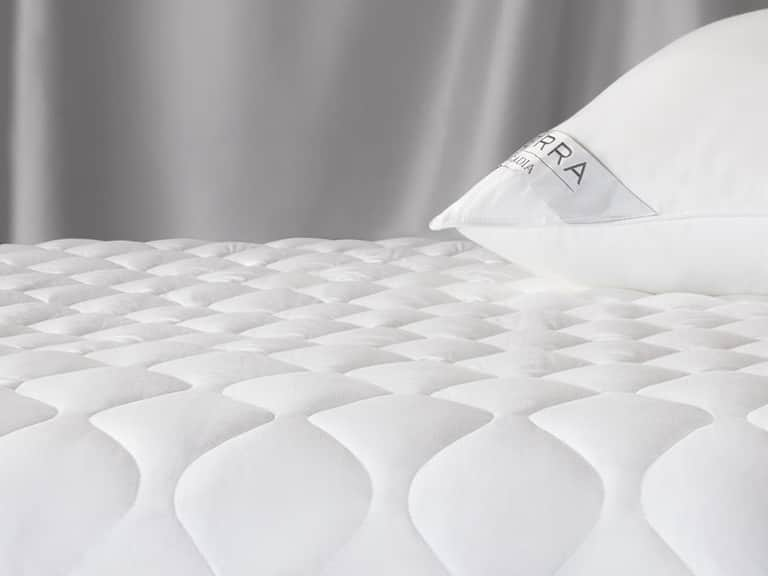
- Protective layers: Introduce waterproof or water-resistant mattress pads where feasible, especially in dorms with shared beds or spill-prone spaces. The Arcadia Waterproof Mattress Pad, with Pluma-fil down-alternative fill and a waterproof bottom, demonstrates how a single accessory can add resilience to a dorm sleeping surface.
- Rotation and flipping schedule: Implement a rotating system to distribute wear evenly. A simple quarterly rotation across rooms can equalize usage and reduce localized sagging.
- Spill response protocol: Establish an immediate, consistent approach to spills: blot, treat, and launder, with clear responsibilities and timelines. Quick action minimizes staining and microbial growth.
- Cleanability and accessibility: Choose materials that are easily sanitized with standard dorm cleaning products and do not degrade under repeated wash cycles.
- Allergen control: For facilities with residents with sensitivities, select hypoallergenic covers and layers to minimize exposure to dust mites and other allergens.
Case studies: the design of shared sleep spaces
To bridge theory and practice, three historical figures—though from different eras—offer resonant perspectives about sleep, space, and the social fabric of rest. They serve as a lens through which to view dorm mattress decisions not as mere procurement but as an act of care and stewardship.
In the 18th century: Adam Smith's invisible hand, now a mattress pad protector
Adam Smith observed how markets coordinate complex interactions with seemingly invisible forces. In a dormitory, the mattress protector plays a similar role: a small, decisive layer that keeps the larger system—sleep, hygiene, and maintenance—performing smoothly. The most effective dorm bedding strategies often hinge on tiny innovations: a waterproof quilted pad that quietly guards the core, preserving the bed’s integrity for years to come.
In the early 20th century: Jane Addams and the ethics of communal living
Addams championed social welfare and the dignity of everyday life. The dorm mattress, as a site of collective living, is where ethics meet economy: durability, safety, and hygiene are not luxuries but responsibilities. The bed becomes a shared space that requires thoughtful stewardship—an extension of communal care rather than a private indulgence.
In the late 20th century: Rem Koolhaas and the geometry of shared rooms
Koolhaas’s interest in adaptable, flexible spaces speaks to dorm design: beds that fit neatly into compact plans, modular surfaces that can be reconfigured, and systems that can be upgraded without wholesale replacement. A dorm mattress with modular padding and durable, washable covers embodies that philosophy—structure, utility, and ease of adaptation.
A concrete product example: Arcadia Waterproof Mattress Pad
In the act of protecting a dorm mattress, a single product can illuminate broader principles. The Arcadia Waterproof Mattress Pad, designed for durability and wet-protection, embodies a practical balance of resilience and comfort. Its Pluma-fil down-alternative fill provides a soft, supportive surface, while the waterproof bottom guards against spills—an ideal pairing for shared spaces where cleanliness and ease of care are paramount. The pad uses a six-inch hourglass construction to keep the fill evenly distributed, and elasticized side walls secure a snug fit on up to 17-inch deep mattresses. It is machine washable, which aligns with the dormitory maintenance routine and helps administrators keep beds in sanitary condition without excessive labor or cost.
Beyond the Arcadia pad, consider a layered approach to protection: a breathable top layer to preserve comfort, a waterproof bottom for spill resistance, and a system of corner anchors to remain stable when sheets are changed. This combination reduces maintenance headaches for dorm staff and increases the odds that each sleeper experiences a consistent, comfortable night.
In practice, pairing a sturdy mattress with a dependable, easily washable pad aligns with a core aim: make the bed a reliable, low-friction anchor in the student’s daily life. When students know their sleep surface is dependable and easy to care for, the rest of campus life—studying, socializing, and transitioning to independence—feels a little less precarious.
Recommendations for Direction A: implementation roadmap
Direction A seeks to be a practical, informational resource for communal sleep environments. The roadmap below outlines steps to bring a dorm mattress-focused site to life—balancing content quality, usability, and institutional credibility.
- Define pillars and a content taxonomy: Core pillar articles on dorm mattress selection, hygiene and maintenance, fire-safety compliance, and case studies. Support with buying guides, checklists, templates, and region-specific compliance notes.
- Develop templates for templates: Downloadable checklists (mattress rotation, cleaning schedule), procurement templates, and compliance logs to standardize campus processes.
- Publish evergreen and seasonal content: Emphasize evergreen how-tos while scheduling seasonal updates tied to student housing cycles (back-to-school, summer renovations, etc.).
- Incorporate a product-agnostic stance with a single product example: Use Arcadia Waterproof Mattress Pad as a case study for a protective layer, illustrating best practices without endorsing any single brand as a blanket recommendation.
- Focus on accessibility and readability: Use clean typography, accessible color contrast, and straightforward navigation to serve administrators, procurement staff, and students alike.
- Optimize for search and discovery: Target keywords such as communal mattress, dorm mattress durability, dormitory hygiene, shared sleeping spaces, mattress maintenance checklist, and sleep ergonomics for groups.
Conclusion: the bed as a civic artifact
A dorm bed is more than a platform for sleep. It is a civic artifact within a living-learning ecosystem. The decisions surrounding mattress durability, hygiene, and comfort reverberate through student well-being, academic outcomes, and the efficiency of campus life. By foregrounding practical, hygienic, and durable choices, institutions acknowledge that sleep is not a private luxury but a public service—a cornerstone of a healthy, thriving learning community. In the end, the night invites rest, and the dormitory mattress, properly chosen and well cared for, becomes a quiet but steadfast partner in the students’ journey toward growth and curiosity.
Note: This article uses direction A as a framework for an informational resource. It features a real product example (Arcadia Waterproof Mattress Pad) to illustrate practical application within a non-commercial, knowledge-focused site.